
On the 13th July 2022 the BSP members had the opportunity to visit Castle Farm Lavender in the Darent valley in Kent to see the amazing Lavender fields in full bloom and have a chance to see the Lavender Oil distillation process in full swing. Our group was greeted with a refeshing Lavender infused Tea and some delicious Lavender shortbread.
Our hosts, Lavender farmer William Alexander and Arthur Phillips – CEO and Head of Technical at Elixarome, who has over 50 years experience in the flavour, fragrance and essential oils industry and is technical advisor for Castle Farm Lavender welcomed us all to the farm and took us around the farm to the area where they carry out the Lavender distillation.

Castle Farm is situated in the Darent Valley in Kent which as the crow flies is around 17 miles from Westminster Bridge. The Romans farmed the valley and used the river to transport goods to London. Lavender itself is reputed to have arrived with roman centurions who used it as a wound dressing. In the 1800’s the valley was owned by estate landlords who rented land to tenant farmers, however once grain imports started from the USA many tenant farmers were evicted as they couldn’t compete with the low priced grain from the USA. The estate landlords needed new tenants so Williams Great Grandfather came from Scotland with 17 cows, by train, to take on the tenancy of Home Farm nearby. Rents were reduced as an incentive to take on farms and the cheap imported feed was used to feed cattle that produced milk. The milk was then shipped to the capital. The original Ayrshire cattle were then changed to Friesians who had greater milk yields.
World War II lead to the adoption of the latest farming techniques and some of the original farm was sold off. Castle farm was added in 1932 and expanded. The next family generation added Hop production and cows and Hops still remain part of the farm to this day.
Hops were a big enterprise, and the Hop market is very prone to price fluctuations, so during periods of low pricing the family sold Hops as a decoration. This led to the start of a dried flower business and the family exhibited at RHS Chelsea and won 5 consecutive gold medals.
As the market for dried flowers declined the family explored crops that could be distilled such as Melissa, Sage and Rosemary. The soil type around Castle Farm meant that Lavender was a great fit and the crop is less prone to fluctuations in quality. Melissa for example is difficult to grow, has a yield of around 0.03% and is hard to distil. It requires around 2.5-3 tonnes of crop to produce 1 kilo. Now subject to IFRA restrictions Melissa Water tends to be used more frequently.
During the tour William explained to the group that in order to minimise handling the lavender crop is distilled directly from the truck that delivers it from the field. The whole load is heated within the body of the truck once connected to the steam outlet and the distillation process then takes around two hours. The aim is to have one truck in the field, one on the road and one connected to the distillation equipment.
Its important to have not just flowers but leaves and stems too as they help form a lattice within the truck that prevents the crop becoming soggy.
After distillation the left over plant material is bacteria free after processing and is left to compost for 12 months and then used on the farm so the lavender production has a good sustainability profile. Castle Farm also hosts 40 bee hives and the honey they produce is available to buy. Some of the Lavender crop is sold in bunches or as Pot Pourri.
The yield from each field is very dependant on the weather and the maturity of the plant, with plants from year 6 to 11 tending to give the best yields. In wet weather plant transpiration can be reduced and therefore the lavender yield can be reduced.
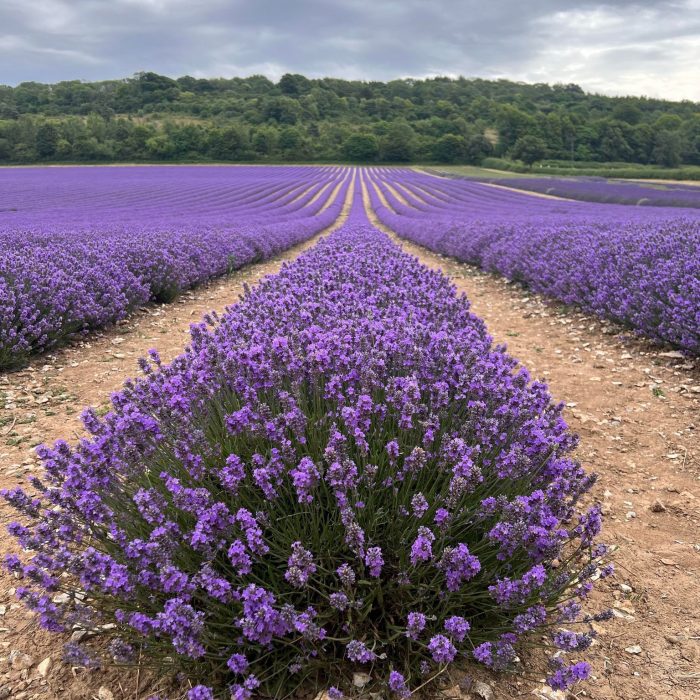
Heavy rain can also cause the lavender plants to collapse. Lavender does not like to have its feet wet and species such as Angustifolia need free draining soil, often Lavender is grown on sloping fields to aid with drainage although the farmer would prefer a flat field !
Weeds are also a big issue for the Lavender crop and if left to go out of control can lead to the loss of plants. Weeds are smothered and weeded out by hand. The crops are rotated every 3 years with wheat.
There are several types of Lavender grown at Castle Farm – the main crop being Angustifolia Folgate which stays bluer for longer and is the best for bunched Lavender. In order to determine the best time to harvest the lavender is assessed and when there are approximately 1/3 buds, 1/3 flowers and 1/3 going over on each stem harvest can begin (at the mercy of the weather). As the flowers mature the Linalool content drops and the Linalyl Acetate content increases and once the flowers meet the 3/3 point the level of these two components is around 50/50.
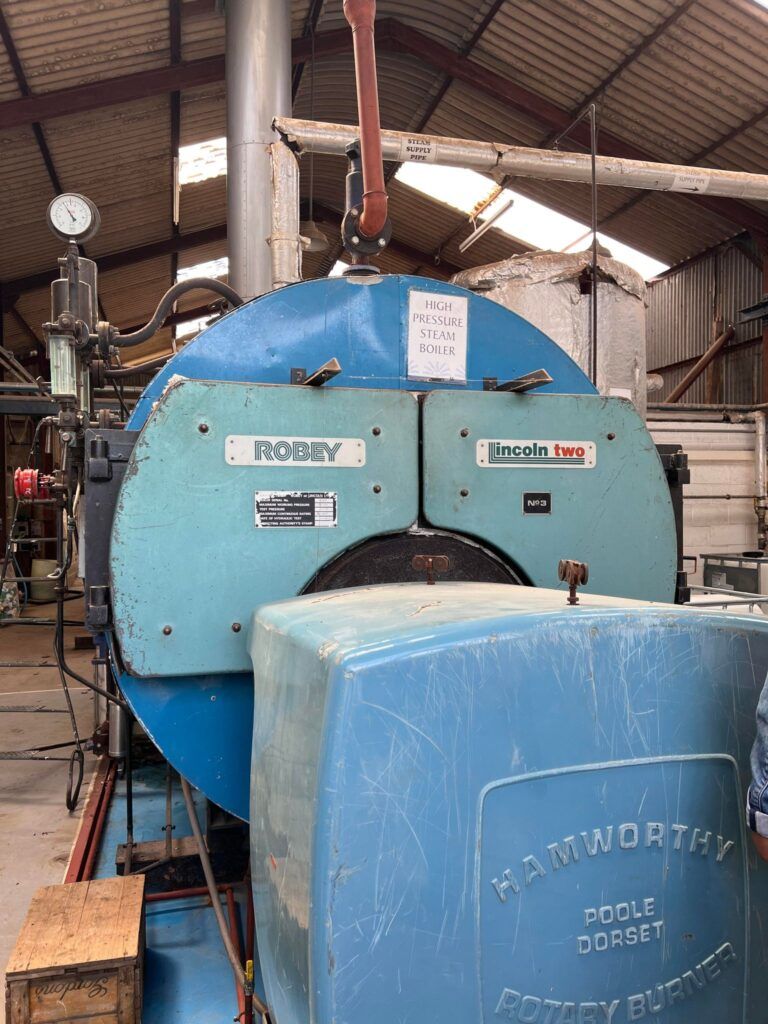


Lavandin Intermedia Grosso is also grown and is more camphorous making it good for more industrial applications such as disinfectants and sanitisers.
After analysis, the farm blends crops to create products that match customers specific needs. If provenance is needed then it is possible to purchase lavender from a single crop however blending is more common. Once the crops are distilled the resulting oil needs to be aged so it can loose some of the more sulphurous compounds. The oil itself can have a shelf life of up to 7-10 years.
In recent times Castle Farm has looked to diversify how the Lavender fields are used and many visitors come to picnic in the fields, take selfies and Instagram pictures. The farm also offers Yoga sessions and Pilates in the Lavender fields and has hosted fashion and film shoots. They are working hard to change the perception that Lavender is just for old ladies and can appeal to all ages. During COVID they introduced a drive through shop.

After the tour of the distillation BSP members had some time to explore the Lavender fields and take their own selfies ! They then were served a buffet lunch in a tent next to the Lavender fields and had some time to visit the shop ! The group also had the chance to smell a candle created by Emilie Courtois, Perfumer at Elixarome and each attendee received a sample of Marlin Lavender Dune created by Perfumer Ruth Mastenbroek.
Overall it was a fantastic visit and our great thanks go to William and Arthur for a very informative and interesting tour and also Emilie and Ruth for providing the candles and fragrance for the group. Thanks also go to the entire Elixarome team, John Bailey, Honorary Ambassador at the BSP and BSP Council for organising this trip.